Goal: Build a dating app that matches people on psychological compatibility instead of photos and proximity. Use actual attachment theory — the science of how people bond (or fail to) in relationships — as the primary matching signal. Make Tinder look like the dopamine slot machine it is.
I've been online dating since the early 2000s. When Parship launched with its scientific, data-driven approach, I was all ears. I'm data-oriented. I genuinely believe you need just enough of the right information to make good decisions — unless you let your emotions or your base instincts talk. Which is exactly what most dating apps are designed to exploit.
I even freelanced at Parship at one point. Saw the machine from inside. Understood the market. And kept thinking: this can be better. The science exists. Nobody's using it properly.
Then I read "Attached" by Amir Levine and Rachel Heller. The book explains attachment theory — originally developed by psychologist John Bowlby — in plain language. There are three primary attachment styles: Secure, Anxious, and Avoidant. And the combinations matter enormously.
Here's what it looks like in practice. I researched forum posts on Parship's own community boards and saw the same pattern repeated hundreds of times:
Textbook Anxious-Avoidant combination. Pure poison. The Anxious partner craves closeness and reads silence as rejection. The Avoidant partner needs space and reads contact as suffocation. Neither is broken. They're just fundamentally incompatible in how they bond. And no amount of great sex or shared hobbies will fix that mismatch.
Every dating app on the planet ignores this. They match on proximity, photos, shared interests — surface data. I wanted to match on the thing that actually determines whether two people can sustain a relationship.
The Science — 36 Questions That Actually Matter
The core of prtnr.me is a 36-question psychological test that determines your attachment style. This isn't a BuzzFeed quiz. It's based on the ECR-R (Experience in Close Relationships - Revised), a validated clinical instrument developed at university level for measuring attachment anxiety and avoidance.
I took the original research paper, studied the scoring model, and transformed it into a digital screening tool. Every new user takes the test before they can browse profiles. No test, no matches. Non-negotiable.
The test places you on two axes: anxiety (fear of abandonment) and avoidance (discomfort with closeness). The combination yields your attachment type — Secure, Anxious, or Avoidant — plus a weight indicating how strongly you express that style.
The matching algorithm then uses this as the dominant signal:
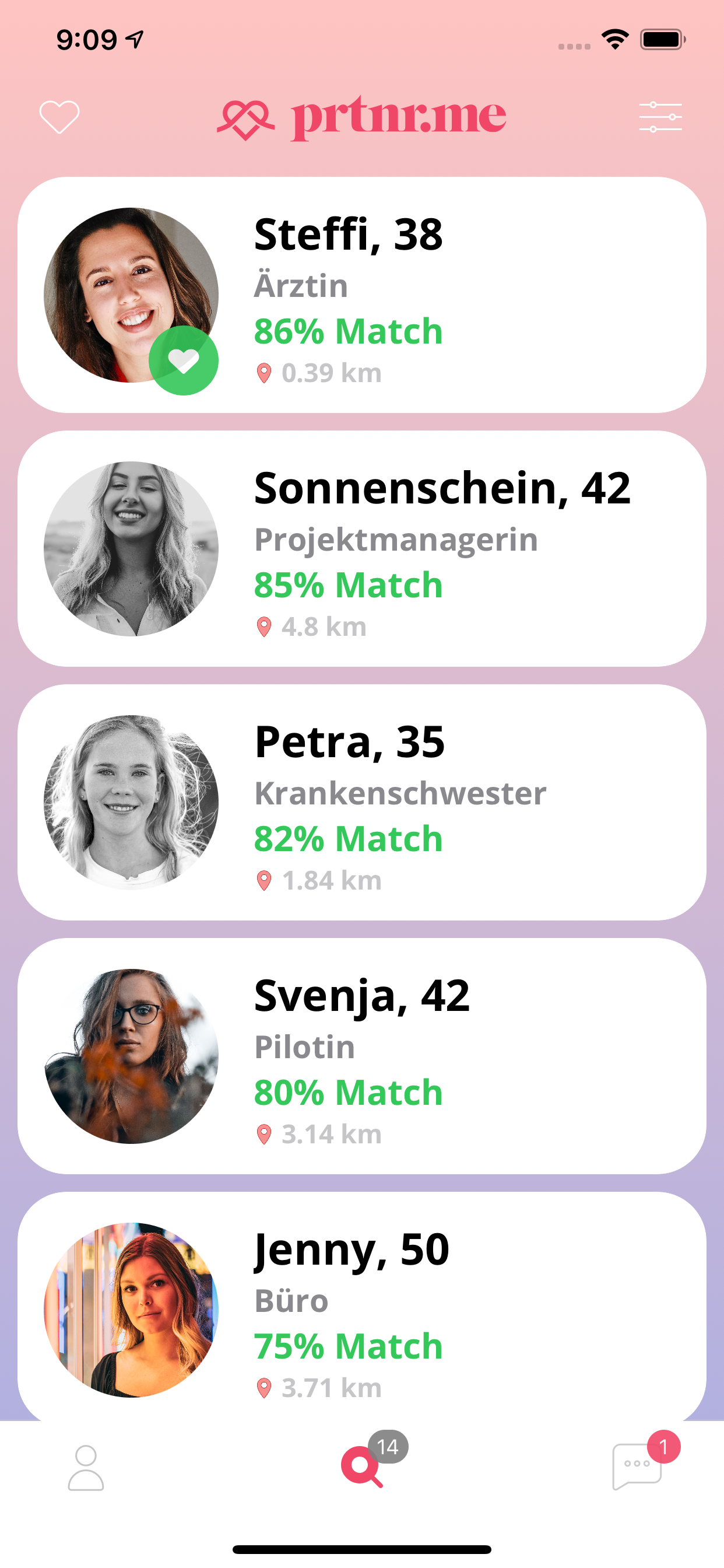
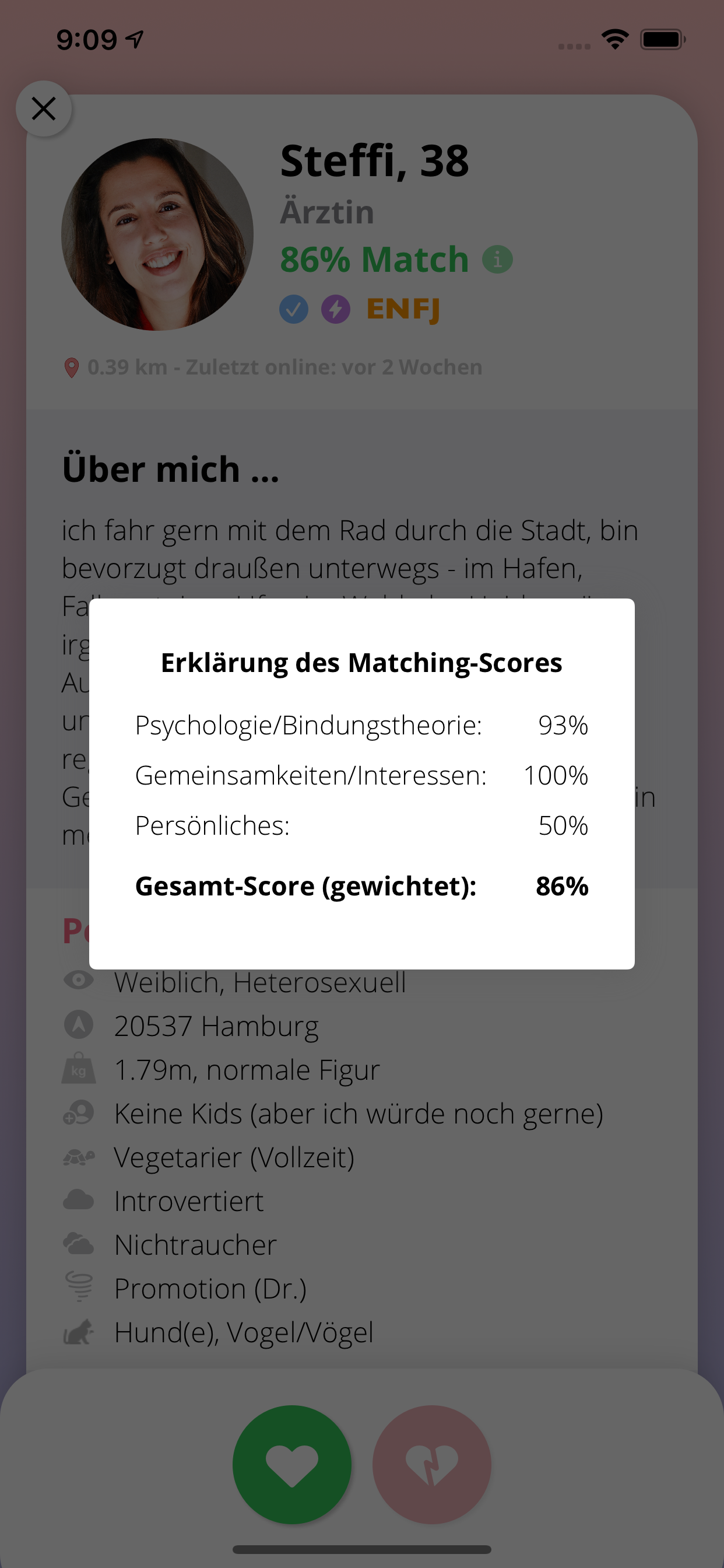
70% psychology. Not 70% "likes the same movies." Not 70% "lives within 20km." Seventy percent of your match score is determined by whether your attachment styles are compatible.
Each pairing is further modulated by how strongly each person expresses their type. A mildly Avoidant person paired with a Secure partner is very different from a strongly Avoidant person paired with an Anxious one.
The Stealth Features — Hidden Doors
prtnr.me had two features that never appeared in any marketing material. Hidden doors for invisible minorities.
1. MENSA MATCHING — Verified members of Mensa (the high-IQ society) could activate a hidden flag on their profile. This let them find partners "on a similar cognitive level" without the app looking like an elitist nerds-only platform. The feature existed because gifted people genuinely struggle to find compatible partners — not out of arrogance, but because cognitive compatibility matters in long-term relationships just as much as emotional compatibility.
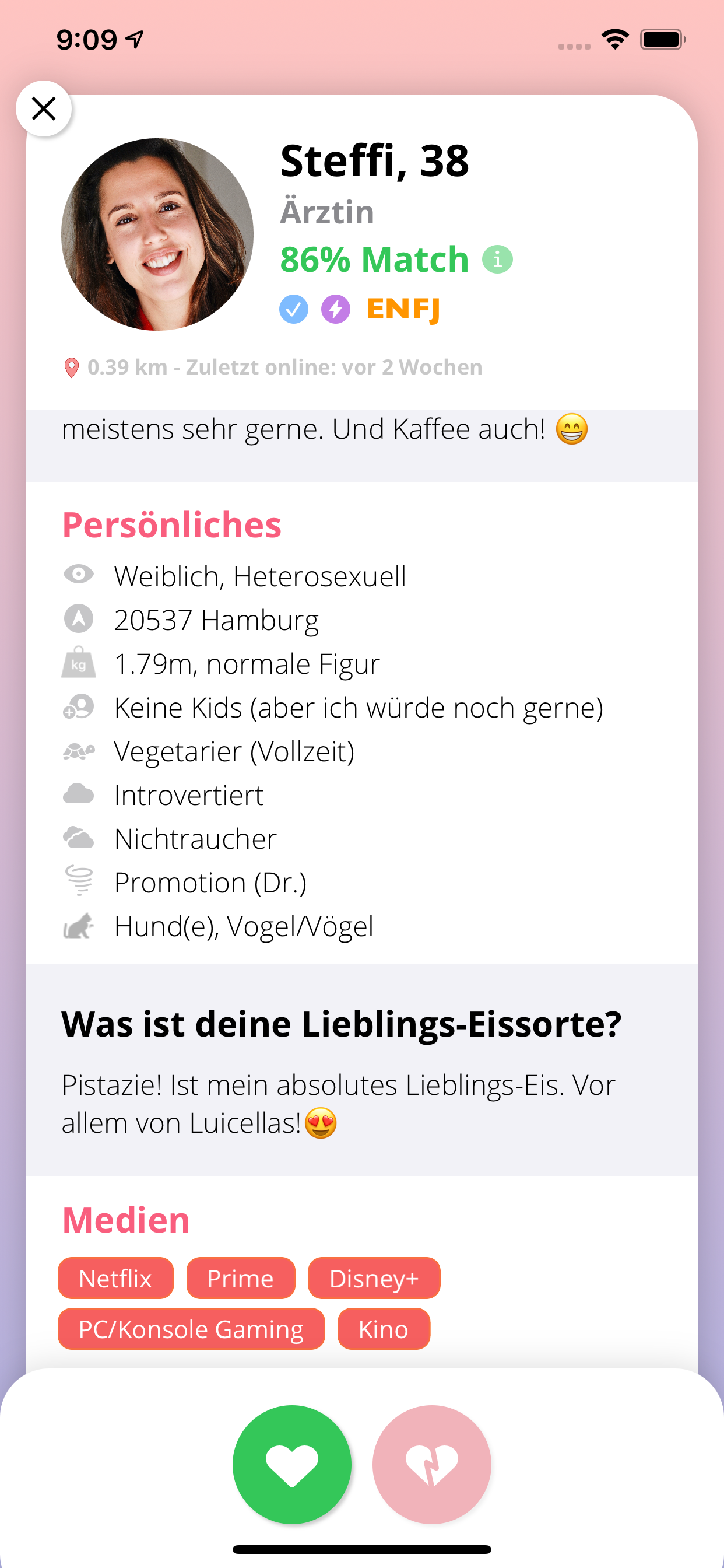
2. NEURODIVERGENT MATCHING — Added in 2025: a similar stealth flag for neurodivergent users. Same idea — dating based on psychological compatibility, shared values, child preference, diet. The real stuff that makes or breaks relationships. No need to advertise it. The people who need it know they need it.
The philosophy behind both: don't stigmatize, don't advertise, just quietly provide the door. Those who need it will find it.
The Product — What Made It Different
Beyond the psychology engine, prtnr.me had deliberate design choices that went against every growth-hacking instinct in the dating app playbook:
No swiping. Users actively like, dislike, or skip profiles. Swiping is a dopamine mechanic designed for engagement, not for finding partners.
99-hour chat expiration. If nobody talks for 99 hours, the conversation dies. Anti-ghosting by design. Either engage or move on. No zombie matches cluttering your inbox for months.
No tracking. German servers. Encrypted data. In 2025, I went further and encrypted every personal field at the database level — names, emails, phone numbers, cities, professions. Because dating data is the most intimate data there is.
Daily mottos. Small touches of personality.
Complaint system. Because accountability matters.
A hybrid of Parship's depth, Bumble's respect, and OkCupid's openness. Without their engagement-maximizing monetization.
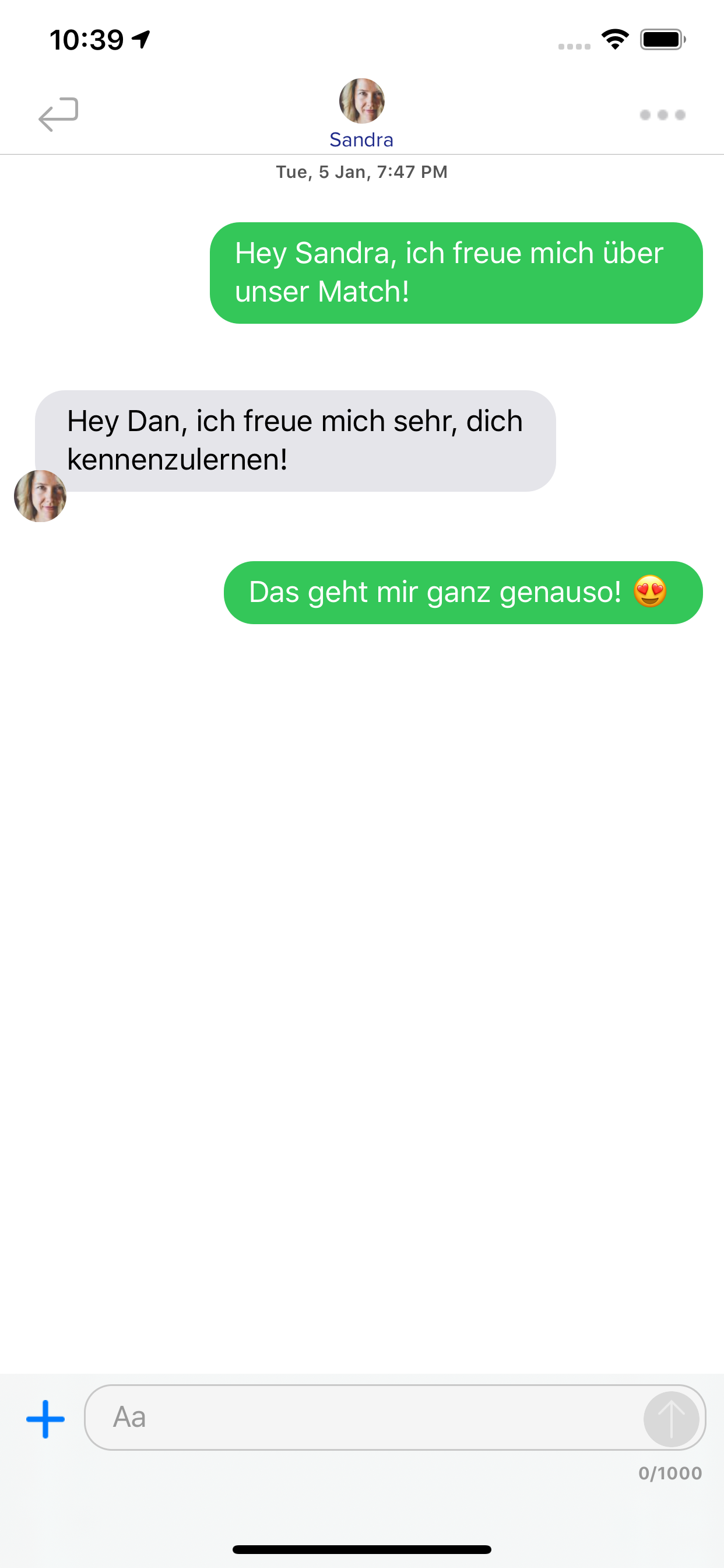
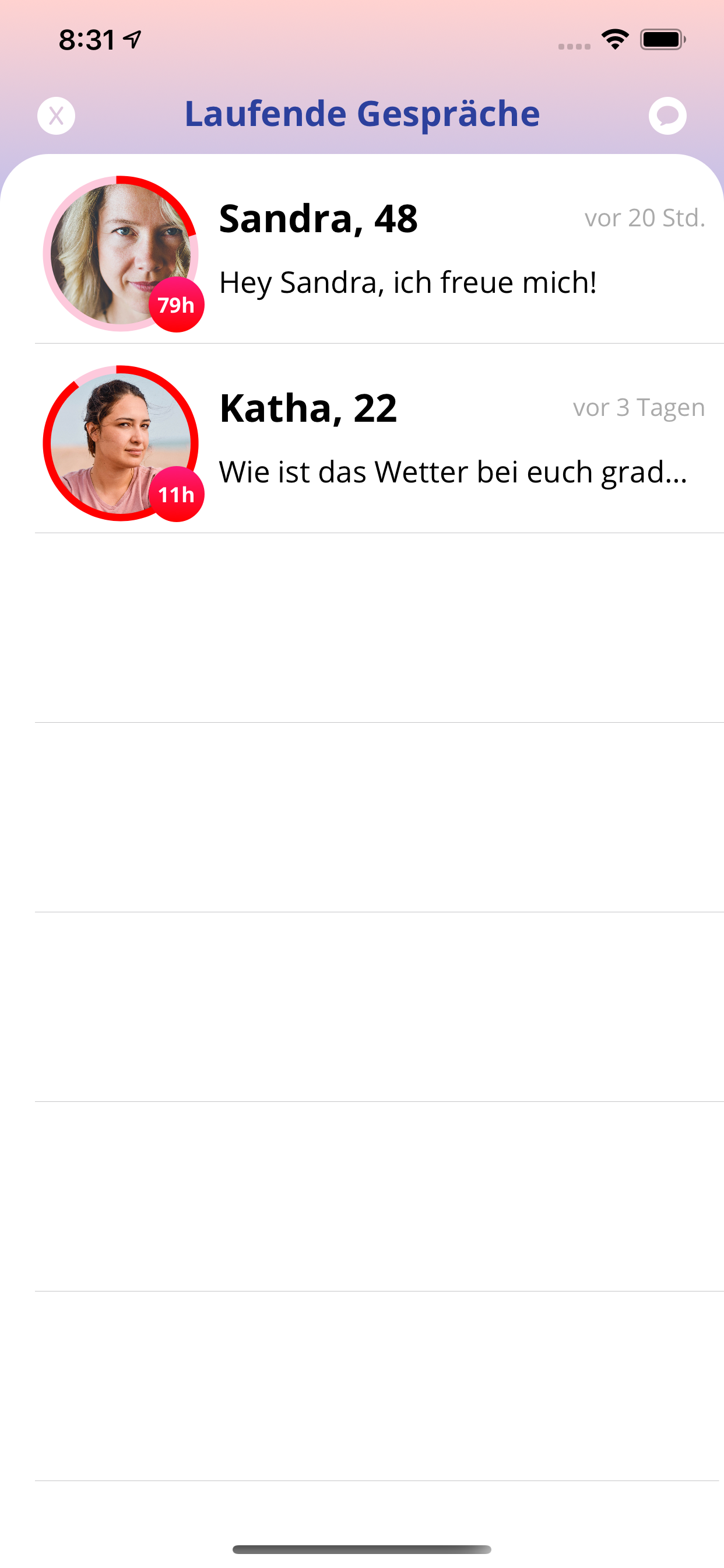
What happened:
Three launches. Three deaths. Five years. Same lesson every time.
The first launch (January 2021) had momentum. Business Insider Germany covered it. Mensa Germany promoted it through their magazine. 350 users signed up. I saw conversations happening on the platform. People were using it. It worked.
But 350 users spread across all of Germany is nothing. The chicken-and-egg problem is merciless: nobody joins a dating app with no users, and you can't get users without users. People messaged me: "The app is nice but there are no people in my area." The same feedback, over and over.
I tried to find partners. Sales people. Offered equity. Everyone loved the idea. Everyone lost motivation within weeks. I don't blame them — selling a dating app against Tinder's marketing machine is a thankless job.
Shutdown in 2023. Silence.
Then 2025. Cyprus. I thought: it's a great algorithm, the world should use it. Especially now, when everyone complains about Tinder's enshittification. Full relaunch. Bilingual — I translated every line of text into English myself. Database-level encryption. The neurodivergent flag. Better tech across the board. Back in the App Store.
Approached Mensa Germany again. This time they asked ME to write the article. I did. Then I met with local business contacts who made it crystal clear: "Your app is un-investable in its current state. You need to find a proper CEO before anyone can invest."
They weren't wrong. I am not a CEO. I am a creator, an inventor. Not a sales guy. I saw enough CEO types during my career to know: creator and operator are different jobs. They serve their purpose. I serve mine.
Final shutdown. For real this time.
The thing that stings isn't the failure. It's that the science is right. I'm 100% convinced that attachment style mismatch is the #1 reason relationships fail. I've seen it in 20+ years of dating. I've seen it in hundreds of Parship forum posts. I've seen it in the research. The algorithm works. The product works. The marketing doesn't. And in this industry, marketing is everything.
I learned this exact lesson 12 years earlier with bedster.de — my hotel booking startup from 2009. Best product doesn't win. Best marketing wins. And here I am, having learned it twice.
The commercial failure didn't sting because the product problem was the interesting part. The science is real. Whether money follows was always secondary to whether the idea was right.